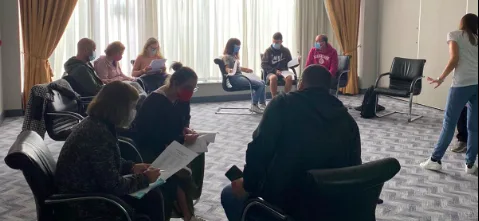
Today, we spent the morning on transferable skills! In the afternoon we will visit Ballyfermot Youth Service.
Category: Uncategorized
-
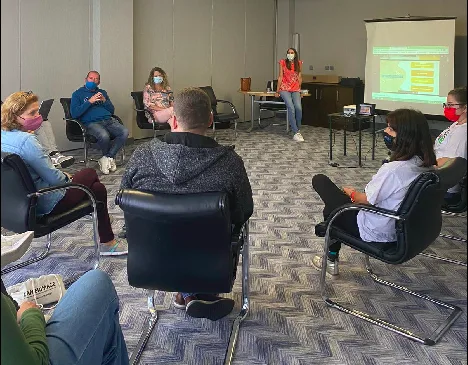
Dublin Job Shadowing day 1
We are in Dublin! Day1: start the Job Shadowing with a lot of energy and desire to find out as much information as possible about youth employment, youth problems and how we can contribute to the solutions.
Also, at today’s session, we are sharing our personal background working with youth/Young people’s needs regarding employability/Adaptation to COVID-19 pandemic.
-
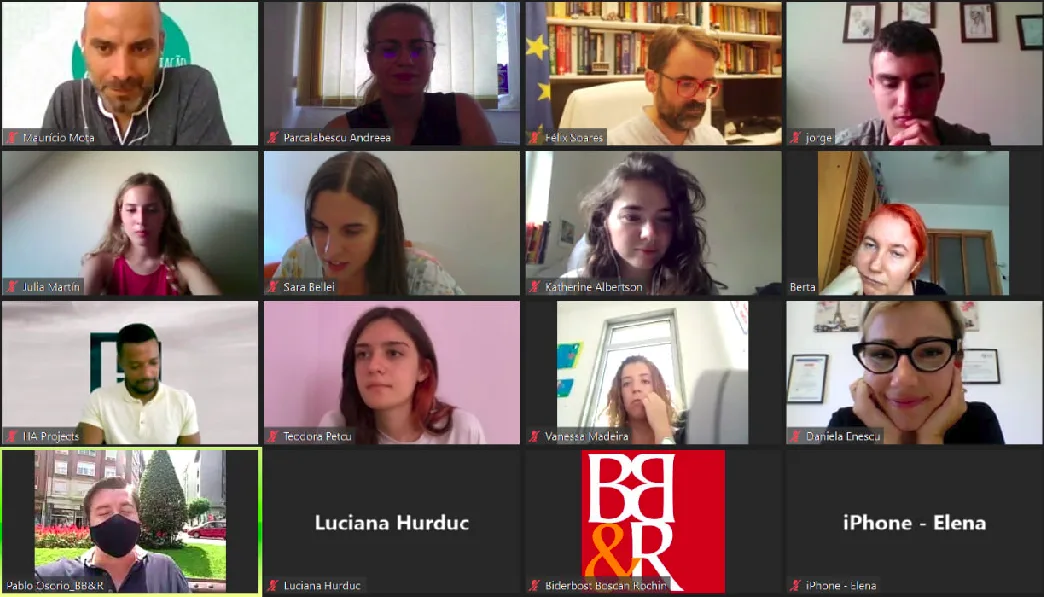
Dublin Job Shadowing preparation meeting
Today we met our partners and volunteers who will participate in the Dublin Job Shadowing and we discussed the time schedule, the activities and all the internal things we must manage. Dublin, here we go!
-
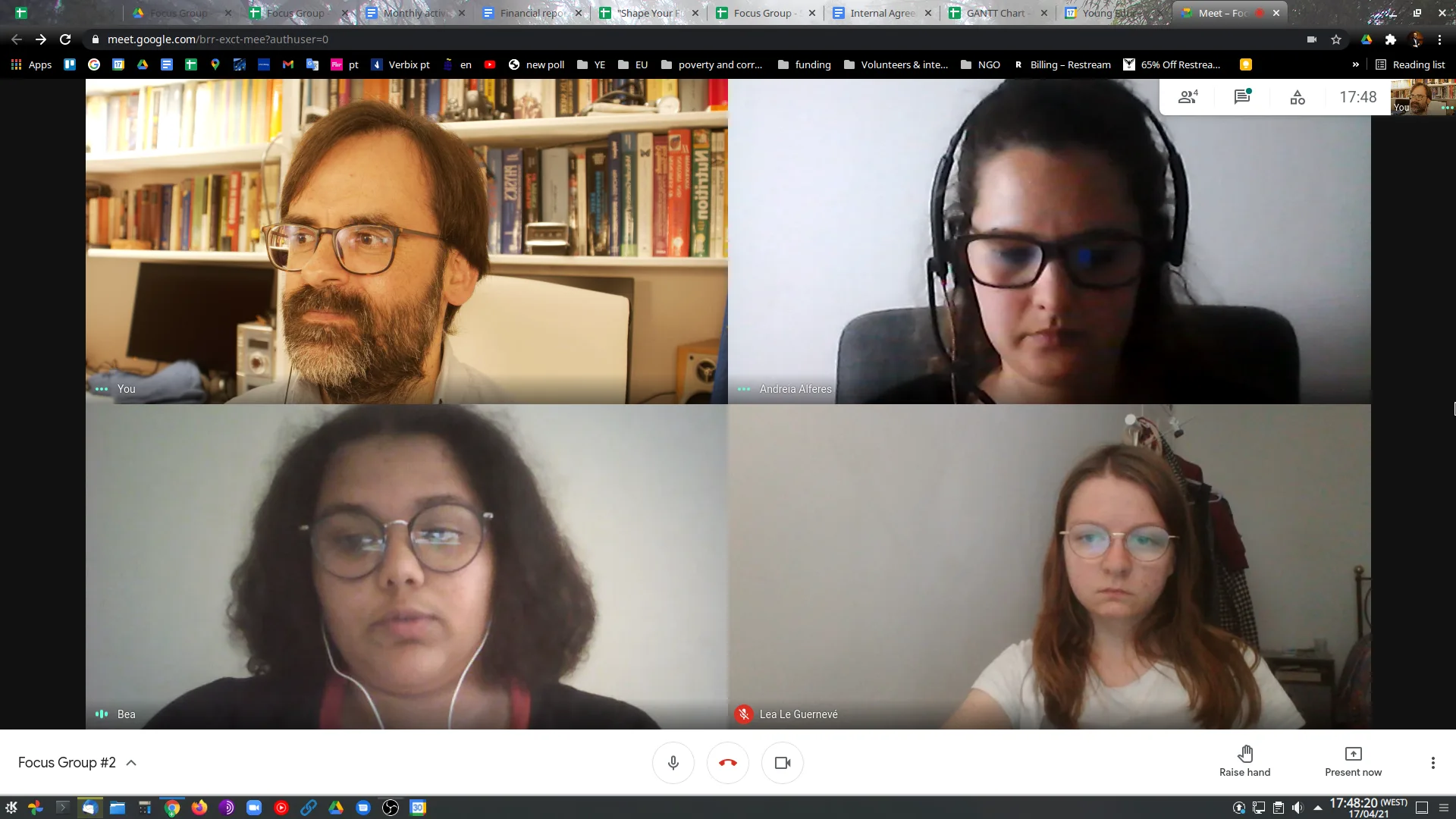
The situation of the pandemic and the activities carried out online, analyzed by the Portuguese partners
The pandemic affected the activities of youth organizations and associations around the world, but those who had ideas and ingenuity quickly turned their attention. This is also the case of our partners in Portugal, who have moved their activity and meetings with young people online. Together, we managed to structure and implement the activities of the “Shape Your Future” project, implemented by the Youth Vision Association, together with Spain, Poland and Ireland. Thus, associations and youth organizations in Portugal conducted online activities such as round tables, consultations, focus groups in which young volunteers and representatives of youth associations and organizations had to answer questions about the pandemic activity, the problems encountered by NGOs during the pandemic, how the pandemic changed the activities of NGOs, what types of courses or materials those in NGOs would need to adapt their methods / activities to existing conditions, whether we are talking about the online or offline environment, possible obstacles in the use of digital tools in the NGO’s work, what are the main advantages and disadvantages of these online tools, what strategies do you use to motivate young people and how have they worked online with young people.
At the round table, participants from Portugal concluded that the pandemic has been a major obstacle for teachers in the teaching and learning process and, although in the non-formal education sector, they believe that the pandemic has had a major impact on children’s lives. and young people. Some institutions have managed to get some support and a few small training courses, which probably would not have worked so well face to face, as they will start to miss work and have no other stimuli, so they have managed to keep them online. , doing some training and already starting their first jobs. Many were lost because they (the organization) failed to create a dynamic of online meetings and it was very difficult to maintain this contact and so the meetings were suspended. Institutions reported that new tools are needed to create activities with young people and to minimize the effects of distancing. Young people realized that they had to interact with each other through platforms, so they distanced themselves even more. Many children and young people did not have computers, but the situation changed with the computers assigned by the state. Also, the representatives of the institutions consider that a Pandora’s box has been opened, this box brings good things, but this does not change what will be more important to maintain relationships, human relations and face to face.
Regarding the strategies used to motivate young people, respondents said that the interaction is the feeling of community spirit that has been lost a little in this context. At the same time, it was difficult to motivate young people to participate online, and access to digital tools was reduced.
The focus group of Portuguese partners was attended by youth workers and young people aged between 18 and 25, and the meeting aimed to understand the skills missing during the COVID-19 crisis in the partner countries among young people. Respondents reported difficulties in integrating young people and low interest in the proposed activities, the need to inform young people about the different activities, to explain their objectives, as well as difficulties in motivating young people when they are in areas with difficulty connecting. Regarding the motivation of young people to participate in online activities, the interviewees said that online meetings distract young people, they focus less, look more at their phone, do something else on the side, generally a decrease in involvement and dedication. The participants also came with some suggestions within the focus group. A platform that makes it easier to find a job for young people looking for their first job. (There are several platforms such as EURES, but there should be more centralized information). Training / workshops on how to gain experience as soon as young people finish university (This is because many companies want young people to already have experience when they have recently finished their studies). Better and more varied information about Erasmus programs (Volunteers indicate that there are more posters and faculty publications, but even so there should be more information and lectures, as many students do not receive this information).
At the same time, within the “Shape Your Future” project, which aims at the social inclusion of young people from disadvantaged backgrounds, integration into the labor market, facilitating access to educational and innovation programs and developing entrepreneurial skills, NGOs were forced to disseminate a questionnaire among young people, a questionnaire that included questions related to age, occupation, the need to improve or not some skills, pandemic training and education, support in identifying a job during the pandemic, we can conclude that the most many young respondents are between 18 and 25 years old (57%), over 65% are young, over 35% of them have a job, while over 25% are unemployed. Over 75% of respondents believe that they need to improve their technical, digital and communication skills and abilities. Over 60% of respondents said they did not receive any training to help them carry out their work or work during the pandemic, and the rest were trained in education and teleworking, and a quarter of respondents they conveyed that they do not want to specialize. More than 80% of respondents said they did not receive any help to keep or find another job during the Covid-19 crisis, and most say they need to improve their skills to and keep or find a new job. 24% of respondents would like to improve their speech, technical and digital skills.
Taking into account their answers and needs, the “Shape Your Future” project will create and make available to young people in the target group, from the five partner countries, the necessary tools to enable them to develop their social, entrepreneurial and professional skills in the market work.
-

Pandemic and challenges to NGOs in Poland
Poland, one of our partners in the “Shape Your Future” project, implemented by the Youth Vision Association, member of the Constanța – Romanian Youth Capital (CCTR) program, encountered difficulties in carrying out Erasmus Plus funded projects. All activities, such as round tables, consultations and focus groups with young volunteers and representatives of youth associations and organizations have moved to the online environment.
Within the “Shape Your Future” project, which aims at the social inclusion of young people from disadvantaged backgrounds, integration into the labor market, facilitating access to educational and innovation programs and developing entrepreneurial skills, NGOs were forced to disseminate a questionnaire in among young people, a questionnaire that included questions related to age, occupation, the need to improve or not some skills, training and training during the pandemic, support in identifying a job during the pandemic, we can conclude that most young respondents have aged between 18 and 21, most are young and over 70% of them are unemployed, looking for a job. Over 50% of those interviewed expressed a desire to improve their digital and English language and business skills and abilities. More than 50% of respondents said they had not received any training to help them carry out their work or work during the pandemic, and the rest were trained in occupational health and safety, but more than 20% of respondents said they would have liked to receive training in digital and communication skills. 45% of respondents said they did not need to improve their post-Covid skills and just over 10% said they needed to improve their skills. The majority of respondents, 75%, said they had not received any help to keep or find another job during the Covid-19 crisis, and most put their digital and communication skills to work. and keep or find a new job.
Taking into account their answers and needs, the “Shape Your Future” project will create and make available to young people in the target group, from the five partner countries, the necessary tools to enable them to develop their social, entrepreneurial and professional skills in the market work.
-
Irish partners, findings on the pandemic and online activities with and for young people
In the midst of the pandemic, the “Shape Your Future” project, implemented by the Youth Vision Association, continued, and the activities carried out by each partner moved to the online environment. Thus, associations and youth organizations in Ireland conducted online activities such as round tables, consultations, focus groups in which young volunteers and representatives of youth associations and organizations had to answer questions about the pandemic activity, the problems encountered by NGOs during the pandemic, how the pandemic changed the activities of NGOs, what types of courses or materials those in NGOs would need to adapt their methods / activities to existing conditions, whether we are talking about the online or offline environment, possible obstacles in the use of digital tools in the NGO’s work, what are the main advantages and disadvantages of these online tools, what strategies do you use to motivate young people and how have they worked online with young people.
At the roundtable, NGOs in Ireland concluded that the pandemic has widened the digital inequality and digital divide gap as older people and digital illiterates are left behind again, allowing youth workers to discover new resources to promote the cause. At the same time, the pandemic was an opportunity for young people who have always wanted to be involved in online activities at this level and have never had the chance to do so before Covid-19. Organizations reported that the main obstacle to using digital tools for their work was the lack of sufficient media and digital skills. It wasn’t until the pandemic began that they realized they lacked digital skills and were reluctant to catch up. In carrying out their work, the organizations reported that they organized and joined group activities to solve social problems, such as those to prevent suicide. Moreover, they managed to prevent a fight organized on social networks by a group of gangs. They also cooperated with public institutions (such as their co-founders and government founders) to develop digital tools and platforms.
Non-governmental organizations have also established the advantages and disadvantages of online tools. One of the main advantages of online tools is the ability to interact with people in a remote setting, despite the restrictions. Another advantage is that after the pandemic, there will be a balance between digital and face-to-face interactions and it will facilitate meetings with partners. In terms of disadvantages, participants say that the digital divide is widening and vulnerable people are becoming increasingly disadvantaged if they do not receive enough support. Another downside has to do with the home environment: participating in zoom calls involves allowing people access to your home, where they can see your quality of life. This factor sometimes prevents young people from engaging in activities and keeping their cameras on.
Regarding the strategies used to motivate young people, respondents said that it is difficult for them to motivate young people because they are quite lethargic because of online schooling. They also use social networks to diversify their actions and try to organize football-related activities. Another strategy is to meet young people individually to engage with them and try to motivate them. When asked about the rating of online work with young people, participants agreed that working online with young people was extremely difficult because the dynamics of work teams and youth groups are distorted. They also report that working online has become frustrating for both young people and youth workers.
The Irish focus group was attended by young people from the NEETs group, aged between 10 and 24, and the session was divided into three parts – the first focused on the employment situation before Covid- 19. During the second, the current situation during the pandemic was discussed. In the third there were thoughts on the future prospects after the pandemic in terms of youth employment. Respondents agreed that finding a job was easier before the pandemic, as more jobs were open and young people had the opportunity to submit their CVs directly. Most participants reported that they prefer face-to-face activities, due to a better understanding of what the person is saying and it is more natural. They also claimed that they need normalcy, so this is another reason why they prefer personal activities. The young people reported that their isolation affected their biological clock: they had problems sleeping and waking up. Another problem – routine and lack of motivation, which increase the time spent playing video games. Moreover, the restrictions do not allow them to go anywhere and they feel that they have a lot of time to spend, but nothing is worth doing. Participants agreed that they wanted to improve their communication skills. In addition, they feel the need to expand their network and get to know someone in the business to find and keep a job.
At the same time, within the “Shape Your Future” project, which aims at the social inclusion of young people from disadvantaged backgrounds, integration into the labor market, facilitating access to educational and innovation programs and developing entrepreneurial skills, NGOs were forced to disseminate a questionnaire among young people, a questionnaire that included questions related to age, occupation, the need to improve or not some skills, pandemic training and education, support in identifying a job during the pandemic, we can conclude that the most many young respondents are between 18 and 26 years old (88%), over 87% are young, over 45% of them are unemployed, looking for a job. 50% of those interviewed expressed a desire to improve their technical, digital and communication skills and abilities. Over 70% of respondents said they did not receive any training to help them carry out their work or work during the pandemic, and the rest were trained in health, but would have liked to have been trained. receive training in the use of technology. Half of the respondents said that they did not receive any help to keep or find another job during the Covid-19 crisis, and most said that they did not need to improve their skills in order to keep or find a new job, and most would like to hone their speaking, technical and managerial skills.
Taking into account their answers and needs, the “Shape Your Future” project will create and make available to young people in the target group, from the five partner countries, the necessary tools to enable them to develop their social, entrepreneurial and professional skills in the market work.
-
How has the pandemic and online influenced the activities of NGOs and volunteers in Spain?
Although the pandemic turned the development of Erasmus Plus projects, with European funding, most of the activities of NGOs, youth organizations, institutions, associations moving online, the Youth Vision Association, member of the implementation team of the Constanța – Youth Capital program in Romania (CCTR) carried out within the project “Shape Your Future” developed in partnership with associations and youth organizations from Spain, Ireland, Portugal, Poland and Romania, several online activities such as round tables, consultations, focus groups in which young people volunteers and representatives of youth associations and organizations were forced to answer questions about the pandemic activity, the problems encountered by NGOs during the pandemic, how the pandemic changed the activities of NGOs, what types of courses or materials would need those in NGOs to adapt their methods / activities to existing conditions, whether we are talking about environments online or offline, possible obstacles to the use of digital tools in the NGO’s work, what are the main advantages and disadvantages of these online tools, what strategies do you use to motivate young people and how have they worked online with young people.
At the roundtable, NGOs in Spain concluded that the pandemic has increased the importance of online activism and the digitization of political / social processes, created barriers for traditional civic activists working offline, stressed the role of digital tools as essential for civic participation. – allowed to discover new resources for the mobilization / promotion of the cause. In carrying out their activity, the organizations encountered problems with the Internet, lack of technology, difficulties in promoting the message to the public, lack of digital skills and tools. Non-governmental organizations have also established the advantages and disadvantages of online tools such as creating connections with partners from other countries, with internal partners and new initiatives and project ideas, and as disadvantages the lack of working tools or poor internet connection.
Regarding the strategies used to motivate young people, respondents said that the main strategy was to make them participants and protagonists of activities and reflections. When asked about the rating of working online with young people, the participants consider that the virtual work of young people was a new and positive experience, because young people brought a lot of digital knowledge to people who did not have online communication skills, especially the elderly.
The focus group conducted by Spain involved 8 young people aged between 20 and 25, and the answers related to the pandemic, the difficulties and problems encountered draw attention to the problems related to the internet connection and technical problems as something unpleasant when conducts online activities. The engagement and participation of young people in activities (educational / work) has increased due to the online format and the circumstances caused by the pandemic. Young people have encountered problems or barriers when it comes to accessing tools that allow them to participate in educational and / or work activities online. Young people may feel more comfortable participating online than face-to-face. There has been an increase in psychological problems among young people due to the circumstances arising from the pandemic (isolation, stress, anxiety). The computer skills of young people are insufficient. Difficulties in accessing quality IT tools have been identified due to poverty and lack of resources. Difficulties among young people in accessing the labor market due to the crisis caused by the pandemic. The most used platforms, both for personal activities and for educational / work activities, are e-mail, whiteboard, google meet and zoom.
At the same time, within the “Shape Your Future” project, which aims at the social inclusion of young people from disadvantaged backgrounds, integration into the labor market, facilitating access to educational and innovation programs and developing entrepreneurial skills, NGOs were forced to disseminate a questionnaire among young people, a questionnaire that included questions related to age, occupation, the need to improve or not some skills, training and education during the pandemic, support in identifying a job during the pandemic, we can conclude that the most many young respondents are between 20 and 25 years old (45%), over 60% are young, over 50% of them are in training or studying, over 60% of those interviewed expressed a desire to and improve digital and communication skills and abilities, as well as managerial and teleworking skills. Over 70% of respondents said that they did not receive any training to help them carry out their work or activity during the pandemic, and the rest were trained to use virtual communication platforms, but they would have liked receive training related to teleworking and digital skills. Most respondents said that they did not receive any help to keep or find another job during the Covid-19 crisis, and most put their digital and communication skills to good use and find a new job.
Taking into account their answers and needs, the “Shape Your Future” project will create and make available to young people in the target group, from the five partner countries, the necessary tools to enable them to develop their social, entrepreneurial and professional skills in the market. work.
-
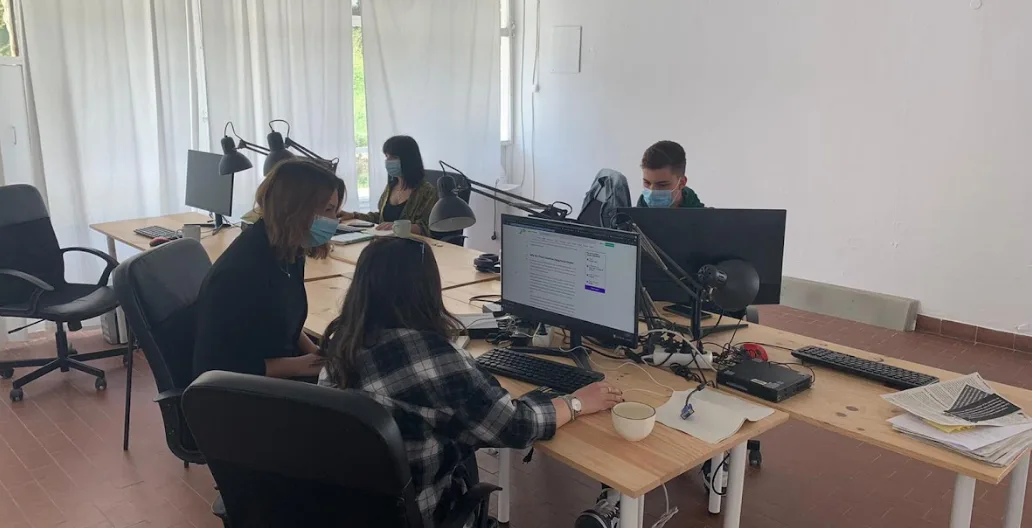
The young Romanian volunteers stood out in Portugal, during the Job Shadowing mobility
With a lot of courage, enthusiasm and curiosity, a group of four young volunteers from the Youth Vision Association embarked on a journey in which they would discover new mentalities and visions, different personalities, different cultures and in which to discover and overcome limits and barriers. The four daredevils participated between May 7-18, 2021, in the Job Shadowing mobility, held in Portugal, in Lisbon, included in the “Shape Your Future” project.
Throughout the mobility period, young Romanians, together with volunteers from Portugal (EAYE – European Association of Young Educators), Ireland (Educational Services Limited) and Spain (Biderbost Boscan & Rochin Sl) combined the useful with the pleasant, participated in activities, did deskresearch, made presentations, created materials that will be included in IOs and also enjoyed outdoor activities, in which they discovered the tourist and cultural attractions of Lisbon.
Participants were divided into teams, one of the teams tasked with creating a social media and job search course that focused on using social networks to find a job and provide basic knowledge on the subject, as well as some videos and book recommendations that can be used to deepen the topic and put into practice what you already know. The course was structured in three modules. In the first part, the young people provided some general information about social networks, the main differences between the most famous types of existing social networks and how companies use them. The second part of the course focused on using social media to find a job. In particular, young people found out what are the most useful social networks to find a job, what are the best practices to use them effectively and how to look for jobs on social networks, and the third and last part came with tips and recommendations for using social media in search of a job.
Another course created by young people during mobility was entitled “Personal skills” and focused on relevant skills and useful tools for English language learners.
At the same time, the participants learned how to set up a business, how to show the business plan, how to promote the business and how to manage it.
The participants identified, following a research, which are the skills that young people who are looking for a job or who want to improve or retrain in the field of work are missing. They fall into two categories: technical and practical skills and personal and human skills (IT, communication, teamworking, management, etc.).
At the same time, the participants made a presentation about May 9, Europe Day, but also about the program Constanța – Capital of Youth in Romania 2021-2022.
The “Shape Your Future” project started from the common need to create a space for young people and youth workers, in which they can find opportunities for personal and professional development. The volunteers identified and created the necessary tools to enable young people from disadvantaged backgrounds, the target group of the project, to develop their social, entrepreneurial and professional skills in the labor market, as well as an online platform to bring them, in the same place, employers, NGOs, institutions and local authorities, but also young people who are looking for a job or various internship and volunteering opportunities, but also an application through which young people can receive real-time information about opportunities in the market work.
The materials will be adapted for each sector of activity of the partners – private, public or civil.
-
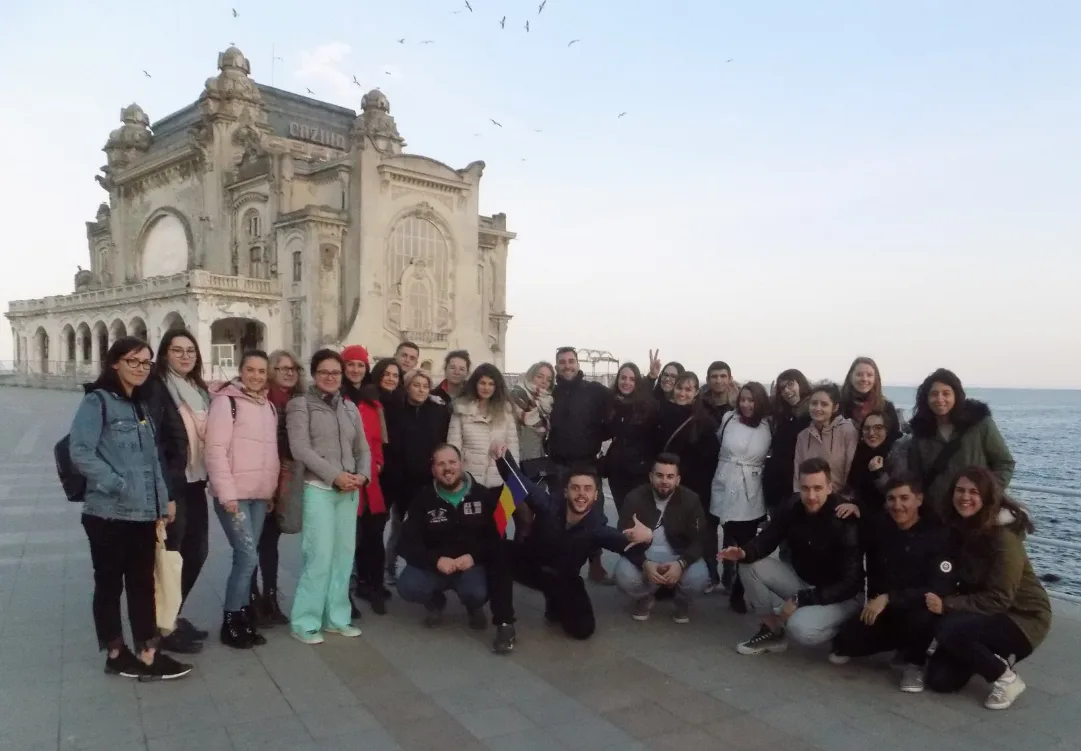
NGOs in Constanta and the challenges of the pandemic
For organizations in Constanța, the pandemic was a challenge. So far, all activities and events have moved to the online environment, but with the relaxation measures, volunteers have been able to participate in activities and actions. The Youth Vision Association, member of the implementation team of the Constanța – Romanian Youth Capital (CCTR) program, carried out within the “Shape Your Future” project developed in partnership with youth associations and organizations from Spain, Ireland, Portugal and Poland, several online activities such as round tables, consultations, focus groups in which young volunteers and representatives of youth associations and organizations were forced to answer questions about the pandemic activity, the problems encountered by NGOs during the pandemic, how the pandemic changed NGO activities what types of courses or materials would NGOs need to adapt their methods / activities to existing conditions, whether we are talking about the online or offline environment, possible obstacles in the use of digital tools in the NGO’s work, which are the main advantages and disadvantages of these online tools, what strategies you use to motivate young people and how they worked online with young people.
During the round table, discussions with the participating organizations (Together for the future, Adapto, AGLT, AISEC, FONT, Ovidius University Student League, Creative Plus, Mare Nostrum) focused on how the participating youth organizations managed the activities with young people during quarantine and in the pandemic context in general, with an emphasis on the situation of volunteers and members, the situation of projects (youth exchanges) and adaptation to online. Some organizations mentioned that they lost the number of volunteers, as they did not find their purpose, did not get involved and even the number of active members decreased.
Regarding the projects, the representatives of the organizations stated that some of the projects have been postponed indefinitely – due to uncertainty, that they have not received information and / or clear information, support, from the financier and have uncertainties regarding the development on further of those projects. The youth exchanges were very affected, noting that these actions are more difficult during this period than last year. Among the young people, there was a reluctance to participate due to fears and context.
The organizations mentioned that they have adapted relatively well to the online environment, which they discovered as an interesting alternative but it was found that for young people (volunteers, young people involved) it is difficult to be online, because they have too many such activities.
At the same time, within the “Shape Your Future” project, which aims at the social inclusion of young people from disadvantaged backgrounds, integration into the labor market, facilitating access to educational and innovation programs and developing entrepreneurial skills, NGOs were forced to disseminate a questionnaire among young people, a questionnaire that included questions related to age, occupation, the need to improve or not some skills, pandemic training and education, support in identifying a job during the pandemic, we can conclude that the most many young respondents are between 18 and 26 years old (96%), over 60% are young, over 50% of them work as volunteers in NGOs or institutions, unpaid, while 19% are unemployed . Over 80% of the interviewees expressed their desire to improve their digital and communication skills and abilities, as well as managerial and entrepreneurial skills. More than 50% of respondents said they did not receive any training to help them carry out their work or work during the pandemic, and the rest were trained to use social and psychological tools, but they would have liked it. receive training related to digital and communication skills. Most respondents said that they did not receive any help to keep or find another job during the Covid-19 crisis, and most put their digital and communication skills to good use and find a new job.
Taking into account their answers and needs, the “Shape Your Future” project will create and make available to young people in the target group, from the five partner countries, the necessary tools to enable them to develop their social, entrepreneurial and professional skills on the market work.
-
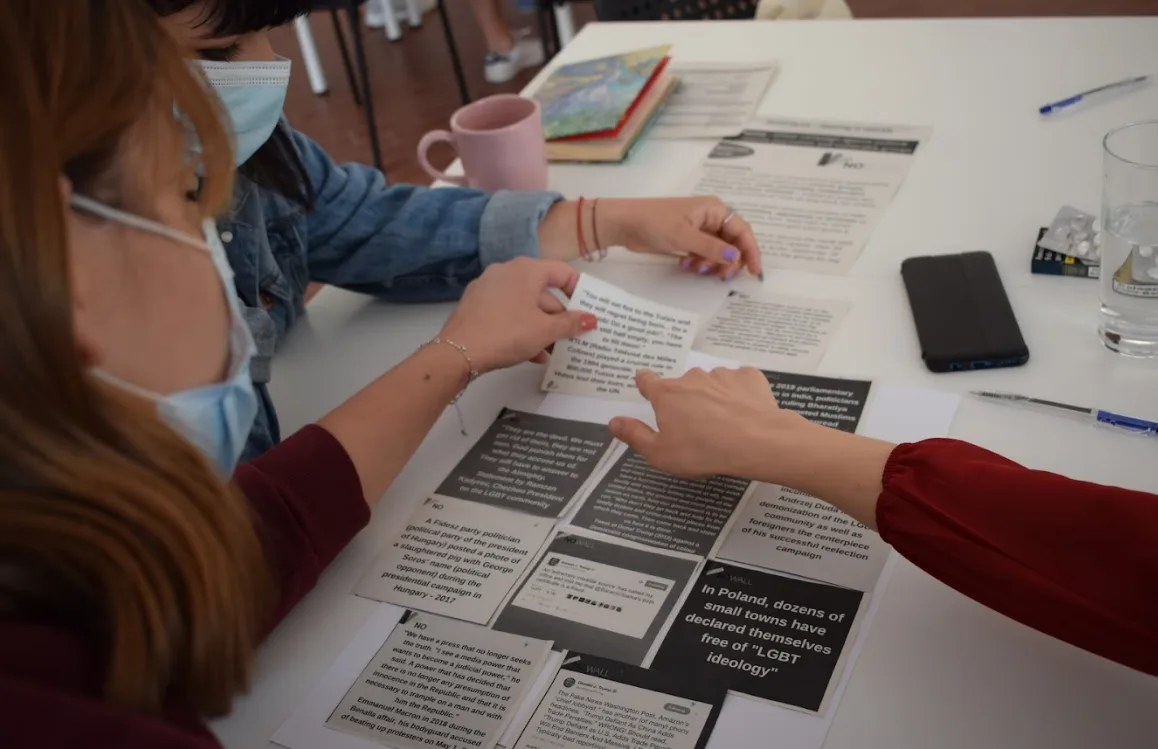
Lisbon Job Shadowing day 10
The last day was The Evaluation Day! The end of a great Job Shadowing! Thank you all the participants for the excellent work! And a Special thanks to all the team member that make this Job Shadowing possible.